
Beyond Elon Musk's flying car: How does SpaceX stand behind the technology? (Photos)
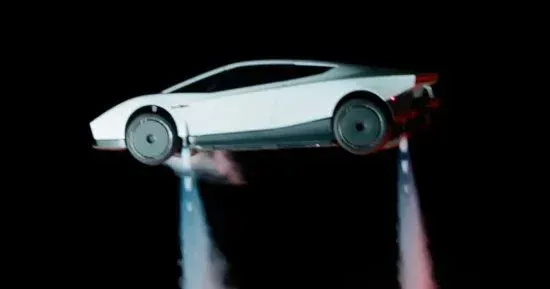
How does rocket propulsion technology work in the Tesla Roadster?.. Secrets of Elon Musk's flying car
The "Tesla Roadster" is generating widespread interest due to the innovative technologies it is said to support its performance, foremost among them a propulsion system inspired by the technology of "SpaceX", owned by American billionaire Elon Musk, which aims to enhance acceleration and provide unconventional capabilities that may include lifting off the ground.
Details circulating about the car point to its reliance on metal nozzles connected to a compressed gas system, in a design that differs from conventional propulsion systems in electric cars, and aims to provide additional power beyond what the electric motors alone produce.
How does the rocket propulsion system work in the Tesla Roadster?
The idea, according to details in the report, is based on a pressure tank made of composite materials reinforced with carbon fiber, known as a "Composite Overwrapped Pressure Vessel" (COPV), which is supposed to be located behind the front seats. It is noted that its capacity may reach about 200 liters, with the ability to store gas under high pressure of up to 10,000 pounds per square inch (psi).
The compressed gas is transferred through a network of pipes and valves to nozzles mounted on the rear of the car, a technology known as "Cold Gas Thrusters" (CGT). Its mechanism works by releasing compressed gas to generate thrust, without resorting to fuel combustion in the way used in conventional rocket engines.
This additional force is supposed to help improve acceleration, along with the power provided by the electric motors, however, determining the actual performance level requires practical tests and documented technical data.
Why does the car use titanium and carbon fiber?
Storing gas under high pressure requires the use of materials that have great durability, while reducing weight as much as possible to maintain the car's efficiency. For this reason, the circulating specifications include the use of titanium in some pipes and thrust nozzles, along with an "Inconel" alloy in parts of the gas distribution system.
As for the pressure tank, it relies on high-strength composite materials, including carbon fiber, which is characterized by its ability to withstand loads with less weight compared to many conventional metallic materials.
These designs benefit from the expertise of the aerospace sector, where composite pressure vessels are used to store gases inside rockets and spacecraft. However, using materials and techniques inspired by the space industry does not necessarily mean that the car is capable of flying in a practical or safe manner.
Can the Tesla Roadster fly and rotate in the air?
One of the most controversial aspects of the project is talk about the possibility of equipping the car with a propulsion system that allows it to lift off the ground and control its movement while in the air.
According to published details, this concept may require increasing the gas storage capacity to about 600 liters, with the addition of other thrust nozzles distributed on different parts of the car. Nozzles directed downward could, in theory, generate vertical force to help lift the car, while other nozzles could be used to change the direction of movement.
But turning this idea into a practical flight system requires a precise balance between thrust forces, weight, stability and control, as well as specialized safety systems. These capabilities should not be treated as proven capabilities for a production car before independent tests confirm them.
How can acceleration from 0 to 96 km/h in 0.8 seconds be achieved?
The theoretical idea is based on combining the power of the electric motors with the additional thrust resulting from the release of compressed gas, which may increase the total force acting on the car during the acceleration phase.
The report includes computational estimates related to the force required to move a car weighing about 1,700 kilograms, to reach a speed of 96 km/h within 0.8 seconds. However, these calculations alone are not sufficient to prove the possibility of achieving the announced figure, as the result is affected by multiple factors, including the actual thrust force, the mass of the car, the grip of the tires on the road, air resistance, and the way the power is distributed.
Also, any talk about using fans to generate additional downforce needs technical specifications and documented tests to determine its real impact on the car's grip and performance.
Therefore, the circulating acceleration figures still need independent verification, and theoretical estimates cannot be considered a substitute for actual test results.
Where does the car get the compressed gas from?
A propulsion system based on compressed gas requires a source capable of providing the required quantities at appropriate pressure levels. In theory, industrial gases can be obtained from specialized suppliers, but using them inside a car needs equipment suitable for safety and operating standards.
The circulating concepts about the project include the possibility of compressing air and storing it inside the car for use in the propulsion system. However, implementing this idea practically raises questions related to the energy required for compression, the size of the required equipment, the storage capacity, and the system's ability to provide gas at the rate and pressure necessary to achieve the targeted performance.
Within the information presented here, there are not enough technical details to confirm the mechanism for refilling the tank or to evaluate the efficiency of the system independently.
Tesla Roadster between innovation and actual tests
The Tesla Roadster reflects the ambition to employ technologies inspired by the space sector in the world of electric cars, by combining electric motors and an additional propulsion system expected to enhance performance in an unconventional way.
However, talk about flying or rotating in the air or reaching exceptional acceleration remains linked to the success of practical tests, and the possibility of providing sufficient levels of stability and safety, as well as confirming the announced technical specifications.
Until independent and documented data is available regarding these capabilities, a distinction should be made between technical concepts and promises related to the car's performance, and the capabilities that have actually been proven in reality.
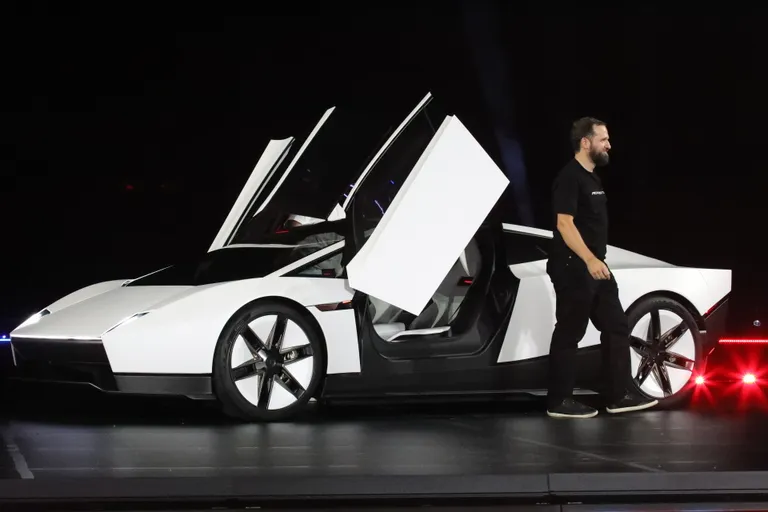
Tesla car doors
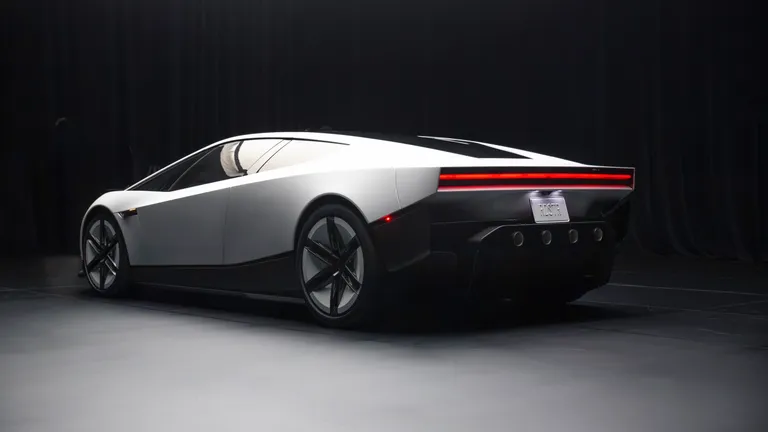
The rear of a Tesla car

New Tesla Roadster

Tesla flying car

Tesla car interface

Tesla car cabin

Tesla car seats

Jets

Tesla car engine