The Suez Canal: a 193-kilometre shortcut between two seas
The Suez Canal is a sea-level waterway that links the Mediterranean Sea to the Red Sea across the Isthmus of Suez. It was inaugurated on 17 November 1869, and the Suez Canal Authority gives its length as 193.30 kilometres, running from Port Said in the north to Suez in the south.
Why a canal without locks
The land between the two seas is low and flat, and the two seas lie at close to the same level, so the canal needs no locks. Ships that use it avoid the long voyage around the Cape of Good Hope at the southern end of Africa, the route that sailors relied on before the canal opened.
Who runs it
The waterway is operated by the Suez Canal Authority, an Egyptian body established on 26 July 1956. The Authority’s own figures show a canal that opened at a depth of about 8 metres and is listed at a maximum water depth of 24 metres by 2015, a sign that the channel has been enlarged in stages since it opened.
A bridge over the water
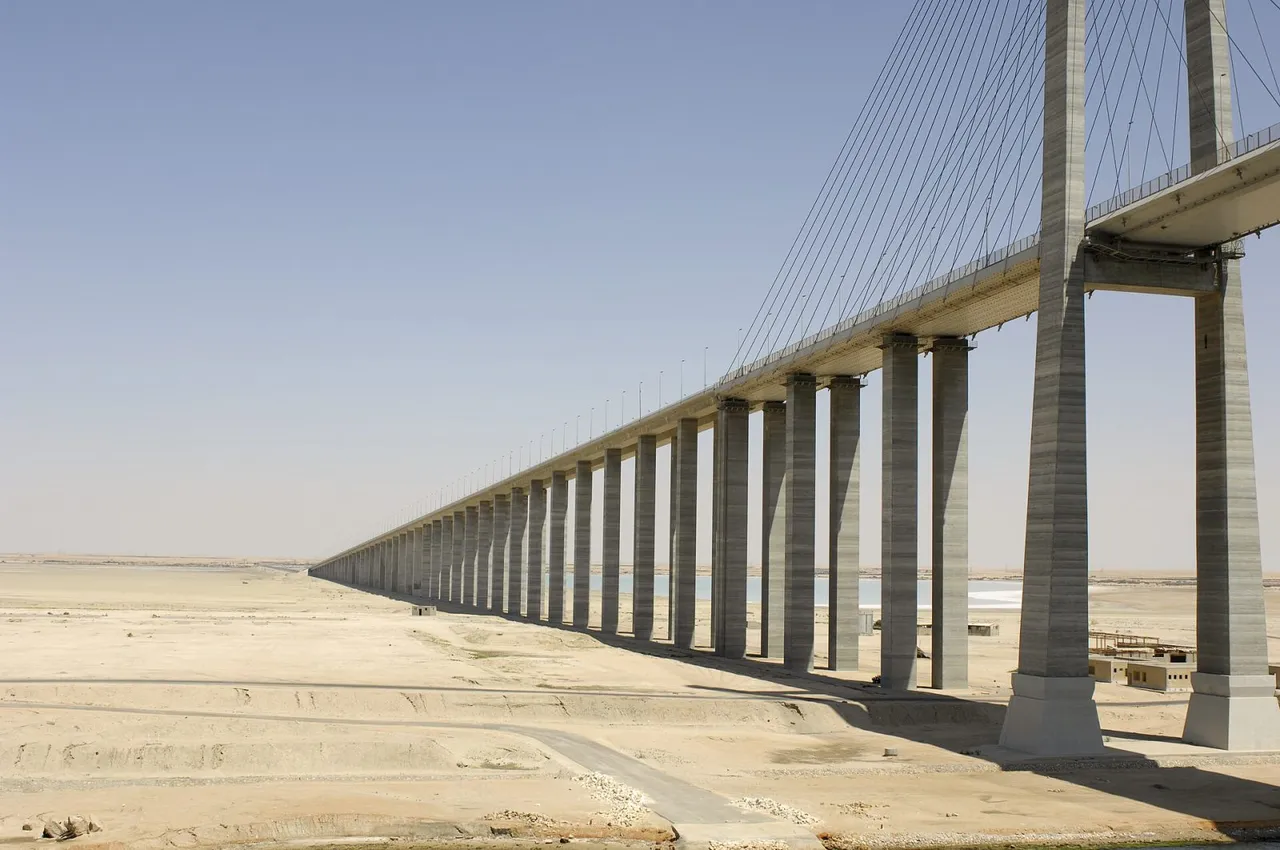
At El Qantara, near Ismailia, the canal is spanned by the Egyptian-Japanese Friendship Bridge, a cable-stayed crossing completed in 2001 with a Japanese grant that covered about 60 per cent of its cost. The bridge leaves 70 metres of clearance above the water, and its two 154-metre pylons are styled after ancient Egyptian obelisks.
Shipping carries around 80 per cent of the volume of world trade in goods, according to UNCTAD, the United Nations trade and development body. That is why narrow waterways such as the Suez Canal draw so much attention from people who follow trade and transport.